Managing Fatigue

Managing Fatigue

Cancer-related fatigue (CRF) is one of the most common symptoms experienced by cancer patients and survivors.

Managing
Fatigue

Physical
Activity

Mental & emotional wellbeing

Management strategies

Cancer-related fatigue

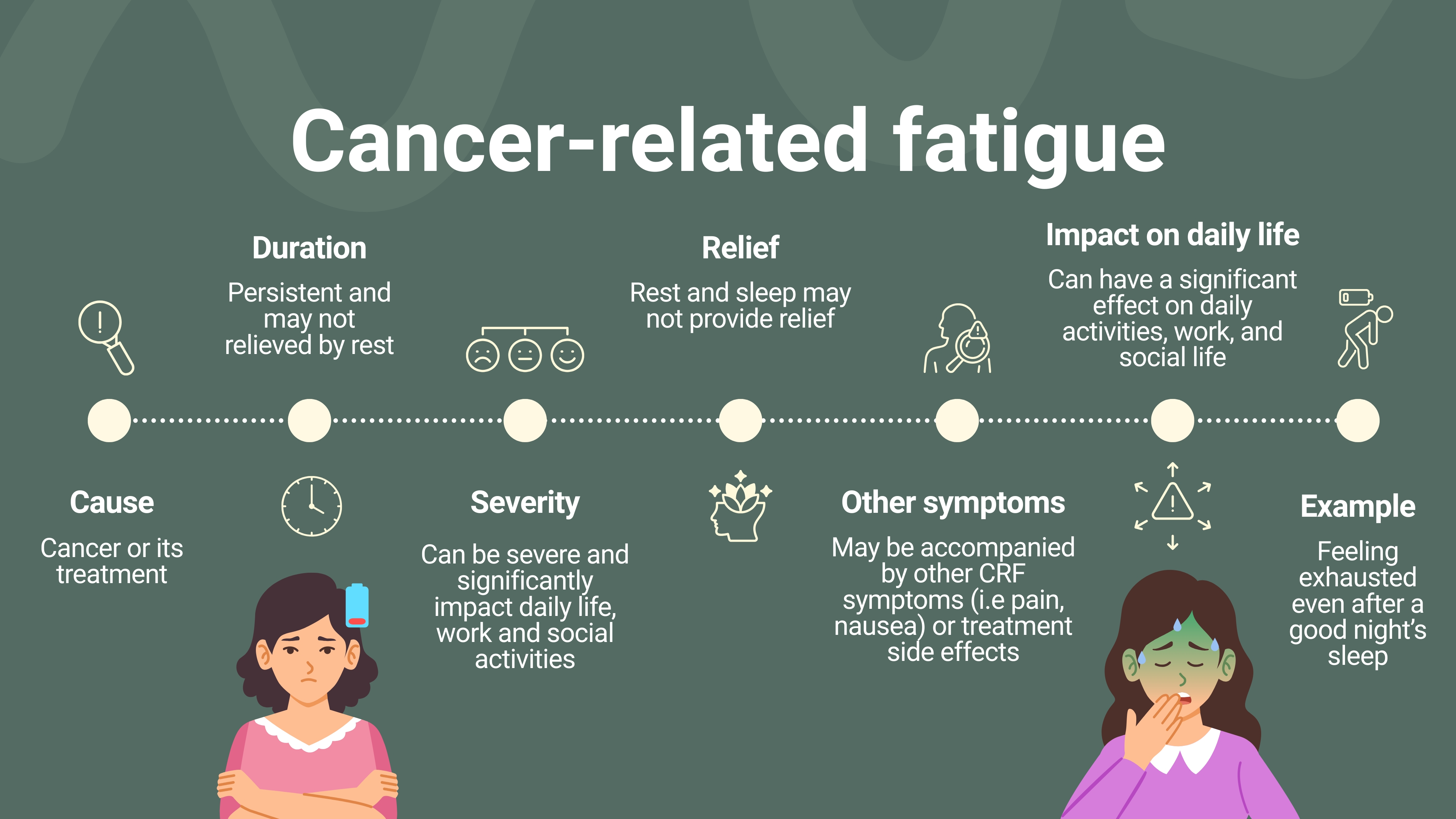
CRF is thought to be caused by a mixture of biological and patient-related factors. Both a symptom of cancer and a side effect of treatment, fatigue is a distressing, persistent, subjective sense of mental, physical and/or emotional exhaustion that is not related to recent activity.

Affecting people with all types of cancer, fatigue interferes with usual functioning and impacts quality of life. It can be experienced before and after diagnosis, during treatment, and when a patient has relapsed or gone into remission.

 
Some patients are more likely to experience long-term fatigue, such as older people and those with an advanced stage cancer. There are also situations where multiple treatments, additional medical conditions or unrelated medications contribute to fatigue.

Lived experience

Watch the video to see a patient's journey through cancer-related fatigue

Tiredness or fatigue?

While tiredness is often relieved by rest, cancer-related fatigue is usually not related to the amount of sleep or activity levels. Drag the arrow on the slider to compare.

Recognising fatigue

Cancer-related fatigue can be quite severe and often comes on suddenly. Some people describe it as feeling weak, drained or washed out.


If you are experiencing fatigue, speak with your healthcare team to see what you can do to reduce its effect on your life.

Managing fatigue

The following approaches have proven to be effective at helping patients to manage their fatigue, including mind-body interventions, improved nutrition, and better sleep.

Learn more about fatigue management strategies

Discover the benefits of physical activity

Find out how to improve psychological & emotional welbeing